

Welcome to TractionCue
Stop treating every uncertainty as a reason to build. Turn it into evidence instead.
Start course →68 FREE INTERACTIVE COURSES
Build less of what people ignore. Read the signals, make the call, and find your next product move—in minutes.
✓Choose one real decision. Leave with one move you can use today.

TRACTIONCUE LIBRARY
All 68 courses are free. Start anywhere and leave with one move you can apply right away.
1 course
Stop treating every uncertainty as a reason to build. Turn it into evidence instead.
Start course →5 courses

Validation starts with access. Map the people you can actually talk to.
Start course →
Good ideas start with problems that happen again and again — not one-off complaints.
Start course →
Your work, hobbies, and frustrations expose problems other builders never notice. Start there.
Start course →
Don't commit early. Compare directions on evidence and pick the one you can learn about fastest.
Start course →
Your first solution will probably change. Make sure the problem still matters when it does.
Start course →3 courses

A product built for everyone fits no one. Name the specific person who feels this problem most.
Start course →
People politely say they would use your product. What they recently did is the only evidence that counts.
Start course →
Write down exactly what could still prove you wrong, then turn it into one small test.
Start course →6 courses

A useful test serves a real choice with a date and a cost of being wrong—not an endless topic to explore.
Start course →
Compliments can suggest a question. Observed behavior and costly commitment provide stronger evidence for a decision.
Start course →
A stage-appropriate sacrifice of time, access, reputation, or money reveals more than another promise to try the product later.
Start course →
Record what happened before explaining why. This preserves evidence that teammates—and your future self—can inspect honestly.
Start course →
A fair test gives the belief a real chance to fail by seeking the person, situation, or behavior that would challenge it.
Start course →
Synthesize repeated situations, behaviors, and consequences while preserving exceptions that may reveal different segments or failure boundaries.
Start course →5 courses

You cannot build the first version for everyone. Start with the people who feel the problem most.
Start course →
A product is a means to an end. Name the change it creates in someone's world.
Start course →
Explain who the app is for and what it helps them achieve, using words they already understand.
Start course →
The same problem can be solved by an app, a service, or a manual workflow. Test the fastest one before committing to code.
Start course →
Every extra feature costs time and hides what you are really testing. Build only what has a clear reason to exist.
Start course →5 courses

One unproven belief could make weeks of coding pointless. Find it before polishing anything.
Start course →
The right test is the smallest one that could change your mind.
Start course →
Use a mockup to test the screen. Do it manually to test whether the result is worth automating.
Start course →
Decide what would convince you before you see results — otherwise you'll rationalize anything.
Start course →
Give someone the mockup or build, then watch where they hesitate without explaining it away.
Start course →6 courses

One loud reaction can inspire a test. It should not quietly become the whole roadmap.
Start course →
Conflicting feedback often describes different situations—not a vote you need to average.
Start course →
A failed test is useful only when you locate which assumption actually failed.
Start course →
Persistence is useful when evidence improves. Repetition without learning is only expensive.
Start course →
An iteration should change because of evidence—not merely because another version is due.
Start course →
Rejecting a direction is not rejecting the builder who explored it.
Start course →4 courses

Ready means the core promise works safely enough for the intended test—not that the product has nothing left to improve.
Start course →
A launch learns faster when a small relevant group already knows why the product exists and agrees to try it.
Start course →
A store page is a promise in sequence: recognizable problem, desired outcome, believable proof, then supporting features.
Start course →
A quiet launch says distribution was weak; it does not yet explain whether the product, message, audience, or channel is wrong.
Start course →5 courses

A like costs nothing. A signup, reply, test, or payment tells you someone cares enough to act.
Start course →
Your feature names explain the app. Your users' words explain why anyone should care.
Start course →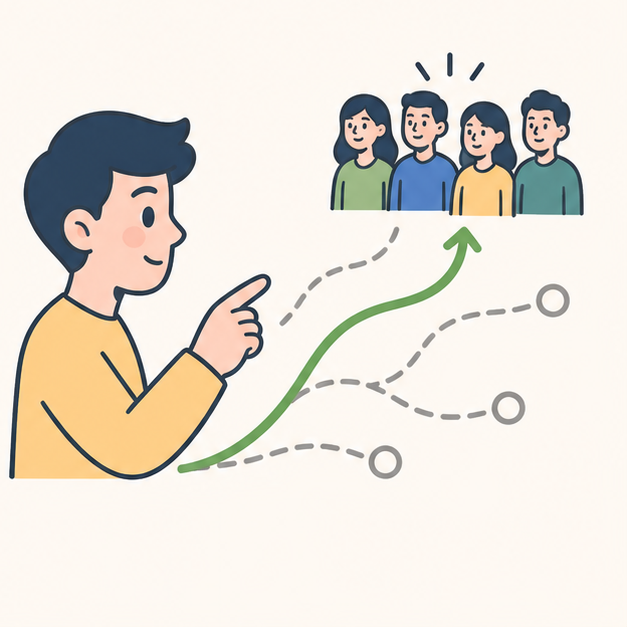
Do not post everywhere. Find one place where the right people already talk and start there.
Start course →
The first ten users come from conversations, not campaigns.
Start course →
Share something that can teach you what people care about—not just prove that you are busy building.
Start course →4 courses

Useful analytics begin with the behavior that means a user reached value, then capture only the steps needed to explain it.
Start course →
Small samples cannot support precise population claims, but repeated failures, complete user timelines, and strong commitments can still guide the next test.
Start course →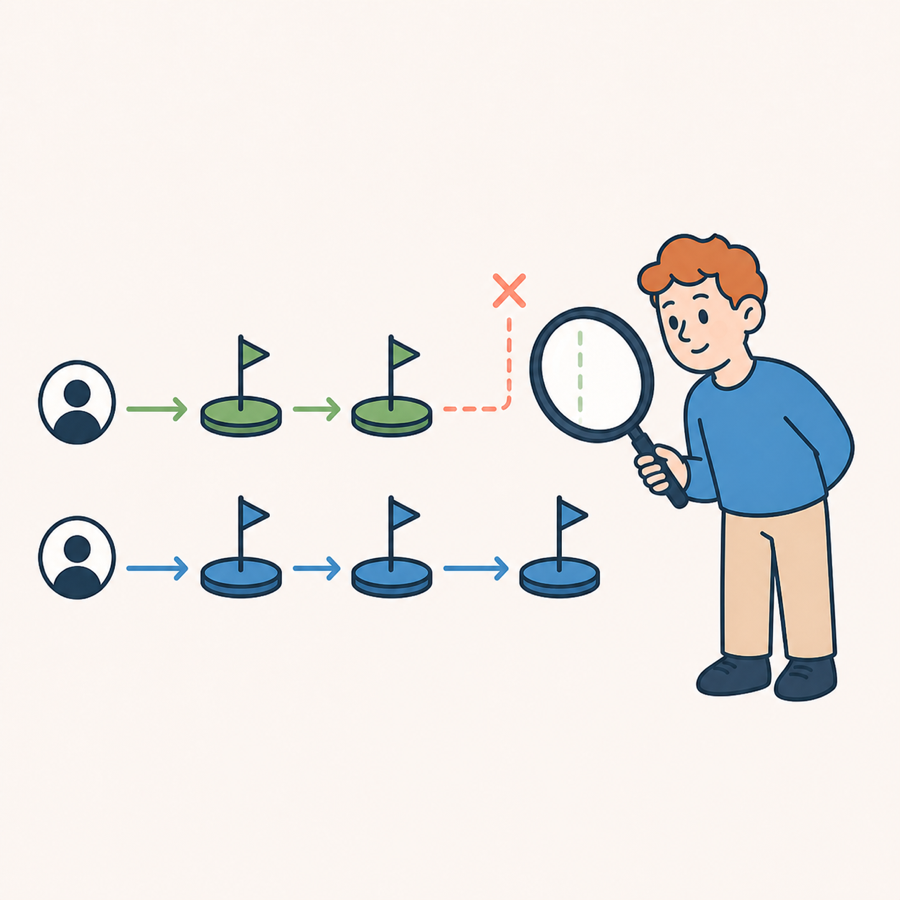
Follow people step by step to see where behavior stops, then compare groups who started under different conditions to see whether the product is improving.
Start course →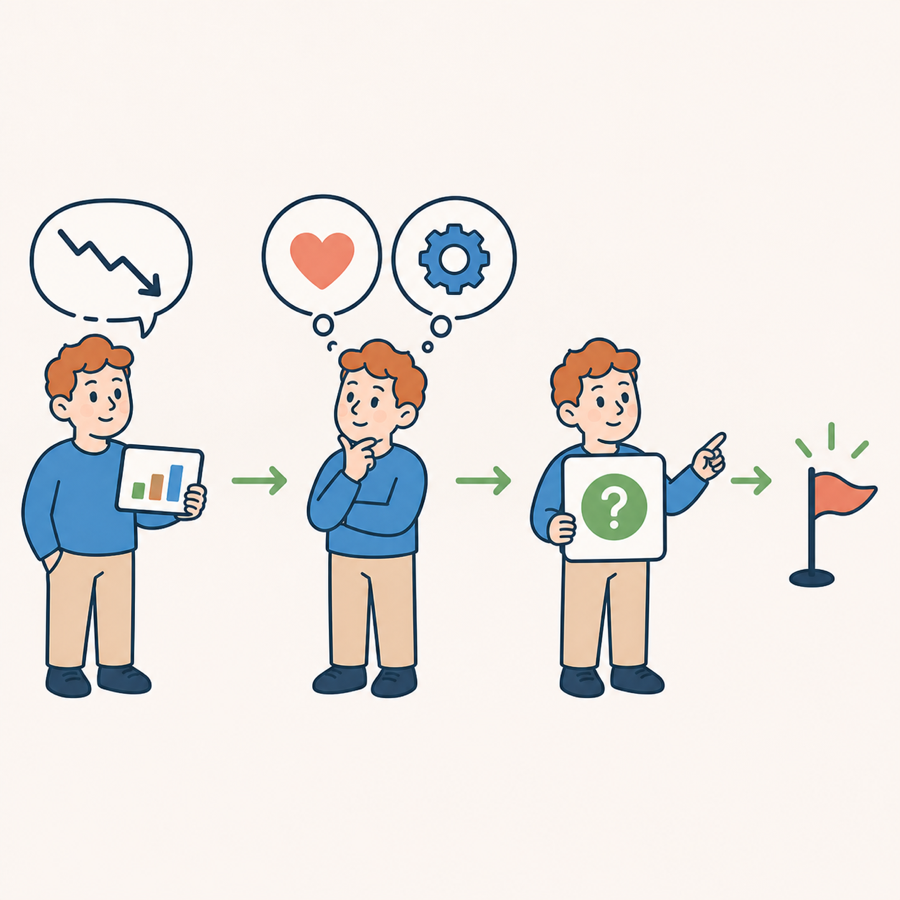
A metric change points to a question. It becomes useful only after you write an explanation the next evidence could prove wrong.
Start course →4 courses

Early growth usually comes from repeating a small relevant channel until its message, audience, and conversion are understood.
Start course →
Distribution compounds when the content solves a known problem and a trusted partner already has the relevant audience.
Start course →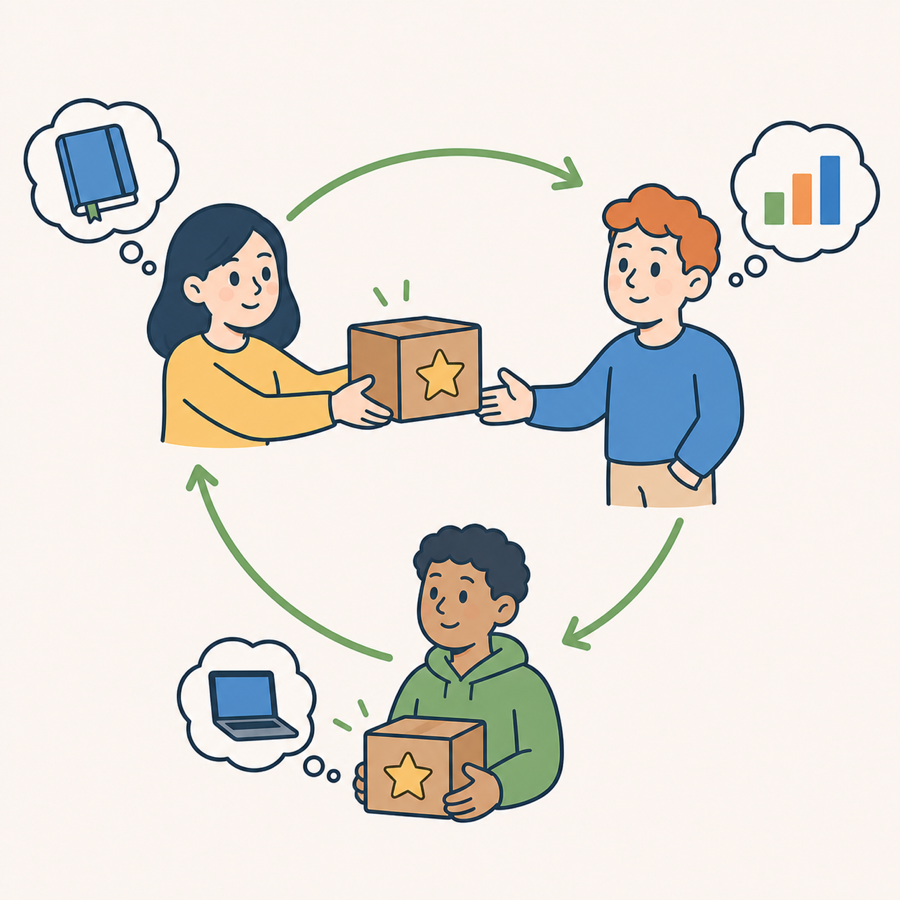
A healthy growth loop makes sharing part of receiving or extending value; a referral is useful to the sender and recipient.
Start course →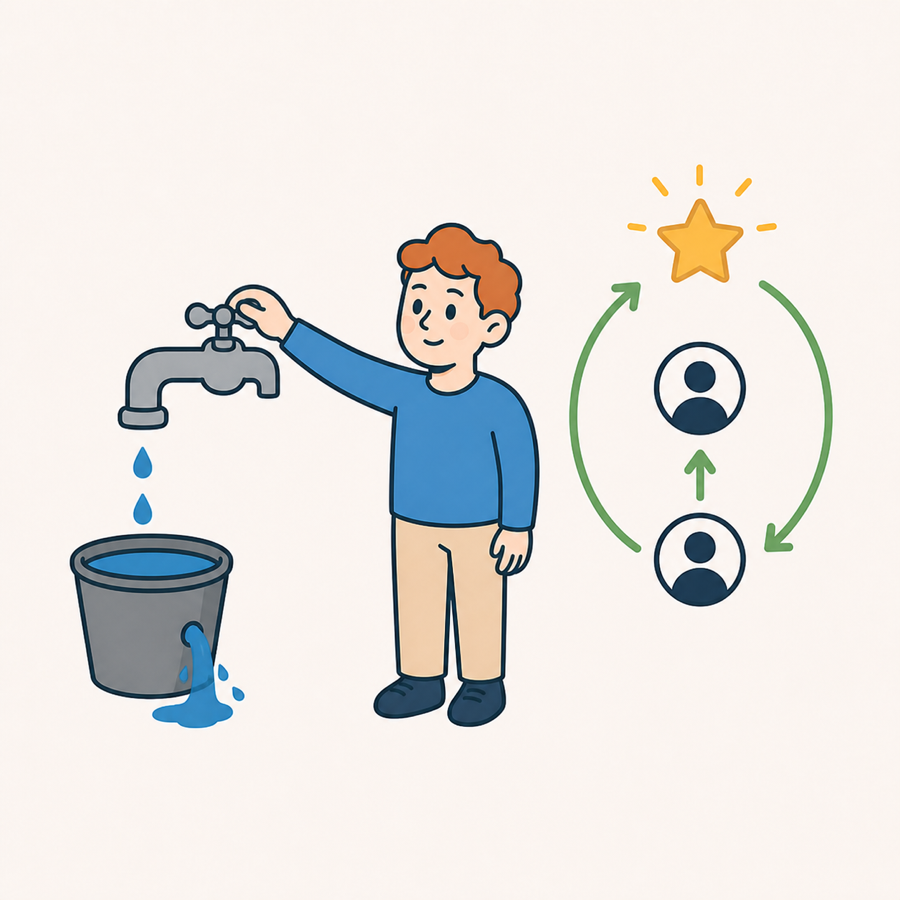
Paid ads amplify the customer value and sign-up path you already have; bringing people back works when a relevant reason to return exists now.
Start course →4 courses

The payment model should match how value and costs recur: ongoing value supports subscription; durable one-off value may fit a one-time purchase.
Start course →
Free should reveal the value; paid packaging should expand the recurring outcome, usage, collaboration, or economic benefit customers care about.
Start course →
A paywall explains the valued outcome, a trial gives enough time to experience it, and an annual plan fits users confident the need will continue.
Start course →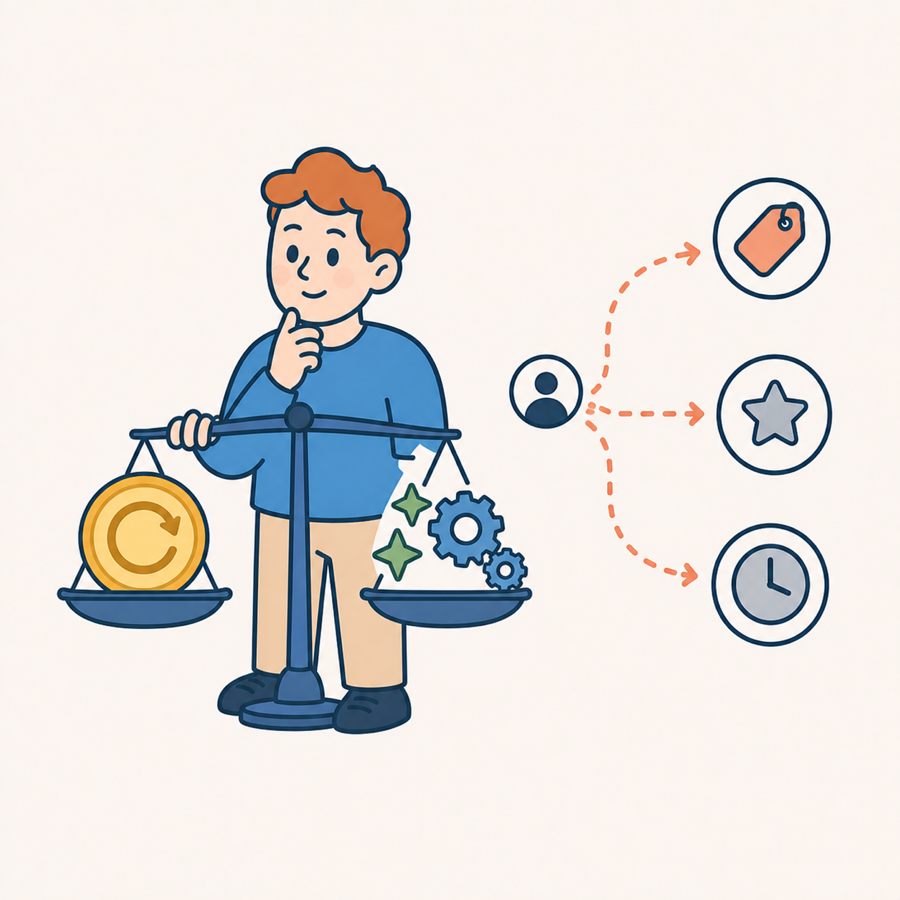
Sustainable pricing accounts for variable usage and margin; cancellation evidence should separate price, missing value, timing, and product failure before choosing an offer.
Start course →5 courses

Signup is not success. Find the first moment a new user gets something useful from your product.
Start course →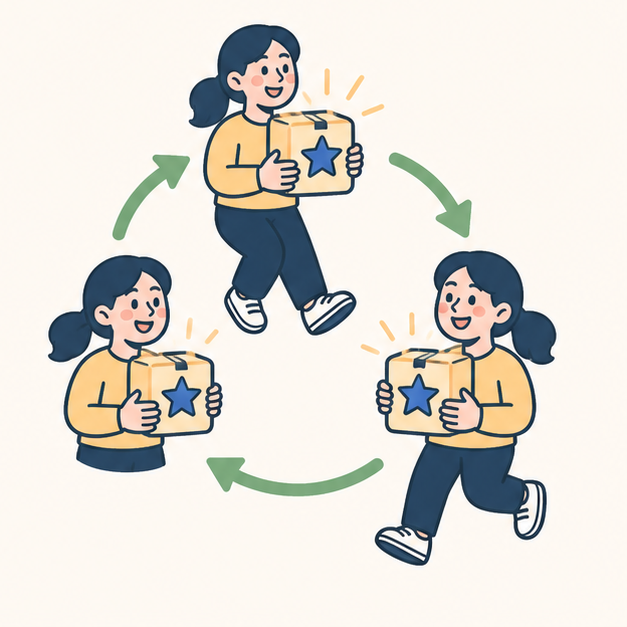
A subscription needs a reason to matter again next week or next month. Features alone are not that reason.
Start course →
People who stop using the app are showing you where the product stopped being worth the effort.
Start course →
People who stayed know what is useful. People who left know where the experience disappointed them.
Start course →
Fix the problem that stops users getting what they came for—not the feature request making the most noise.
Start course →5 courses
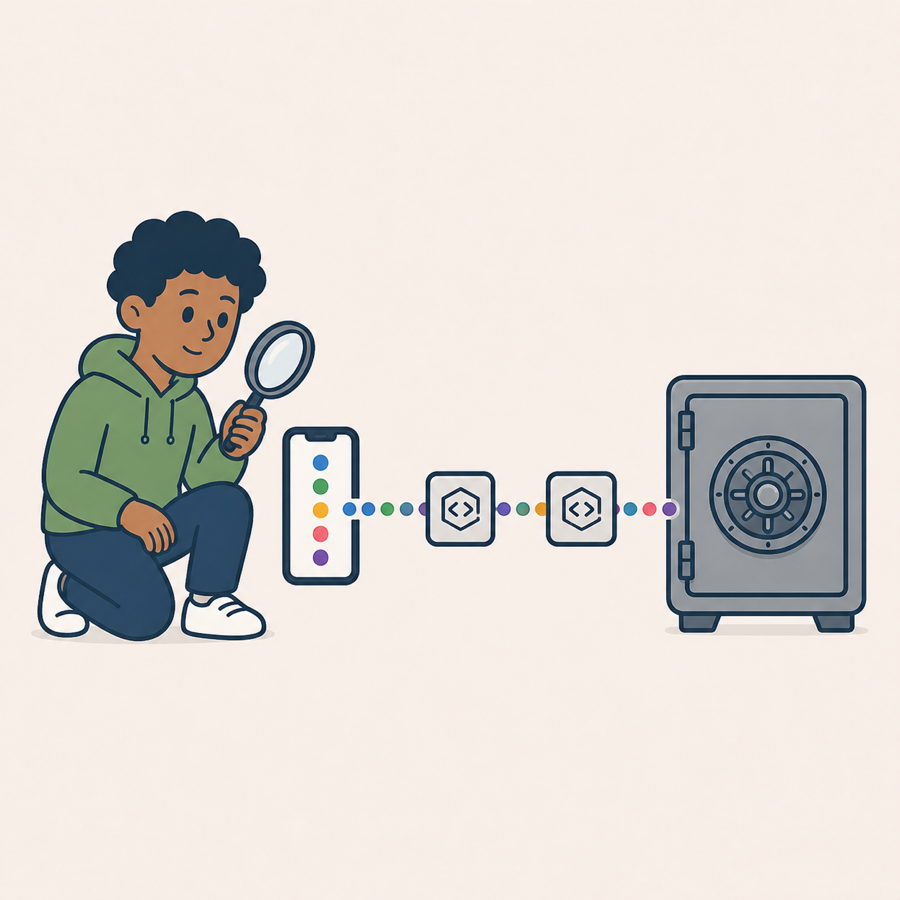
Your data story includes every first-party flow and third-party SDK: what leaves the device, why, where it goes, how long it stays, and who can link it to a person.
Start course →
Permission makes sense when users can see the immediate benefit; deletion should be findable, complete, and clear about what happens to associated data.
Start course →
Consent, purchase, renewal, and cancellation should remain understandable and voluntary—even when a more forceful design converts better.
Start course →
Code, fonts, images, names, training data, and customer content can carry different permissions. Keep a simple source-and-permission record before release.
Start course →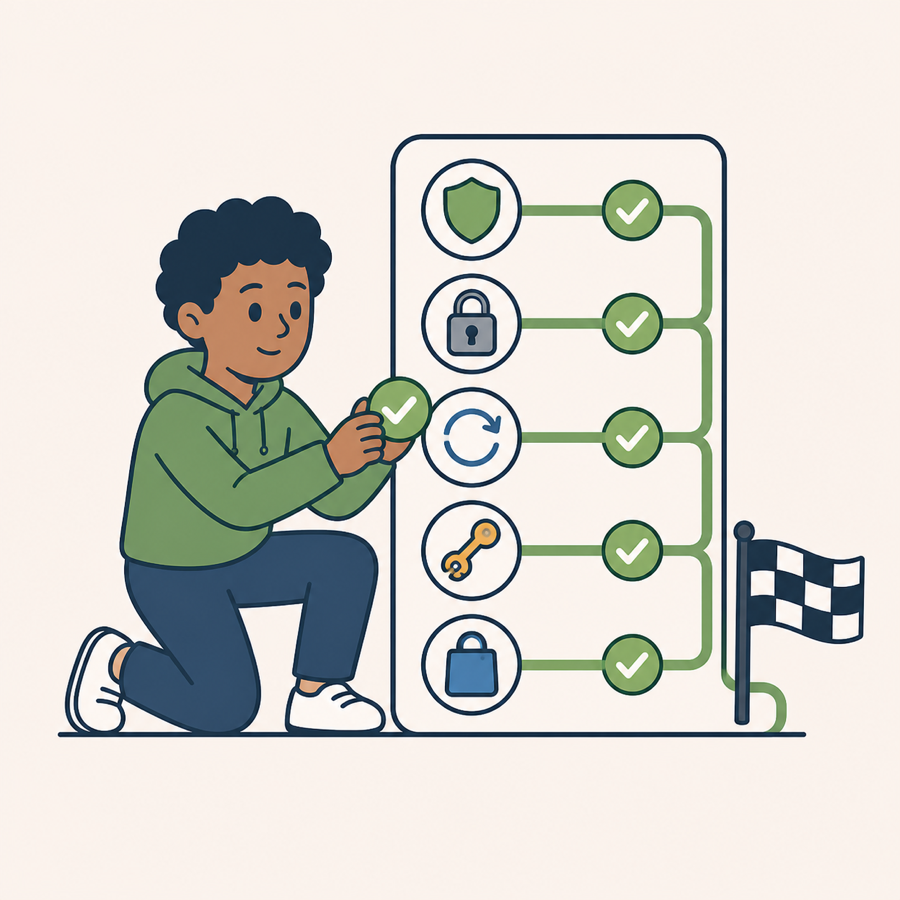
Store readiness is product readiness: metadata, policies, permissions, purchases, reviewer access, safety, and support must match what the binary actually does.
Start course →4 courses
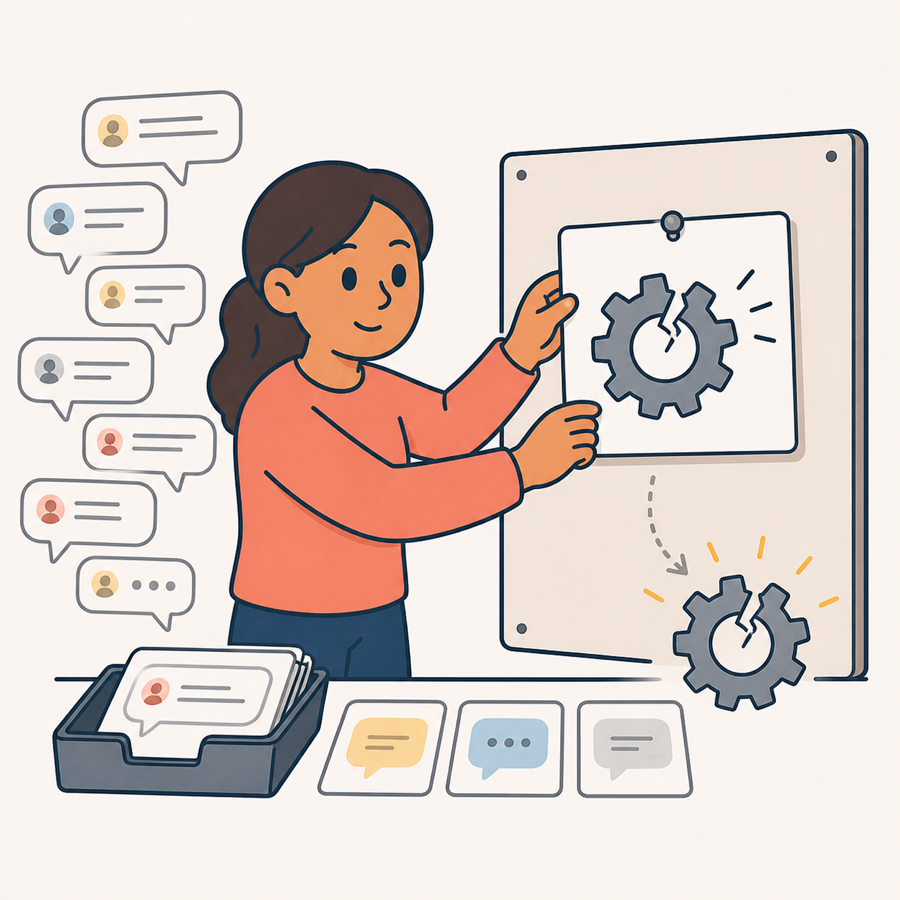
Support is a stream of product evidence when reports preserve user context, expected behavior, actual behavior, severity, frequency, and workaround.
Start course →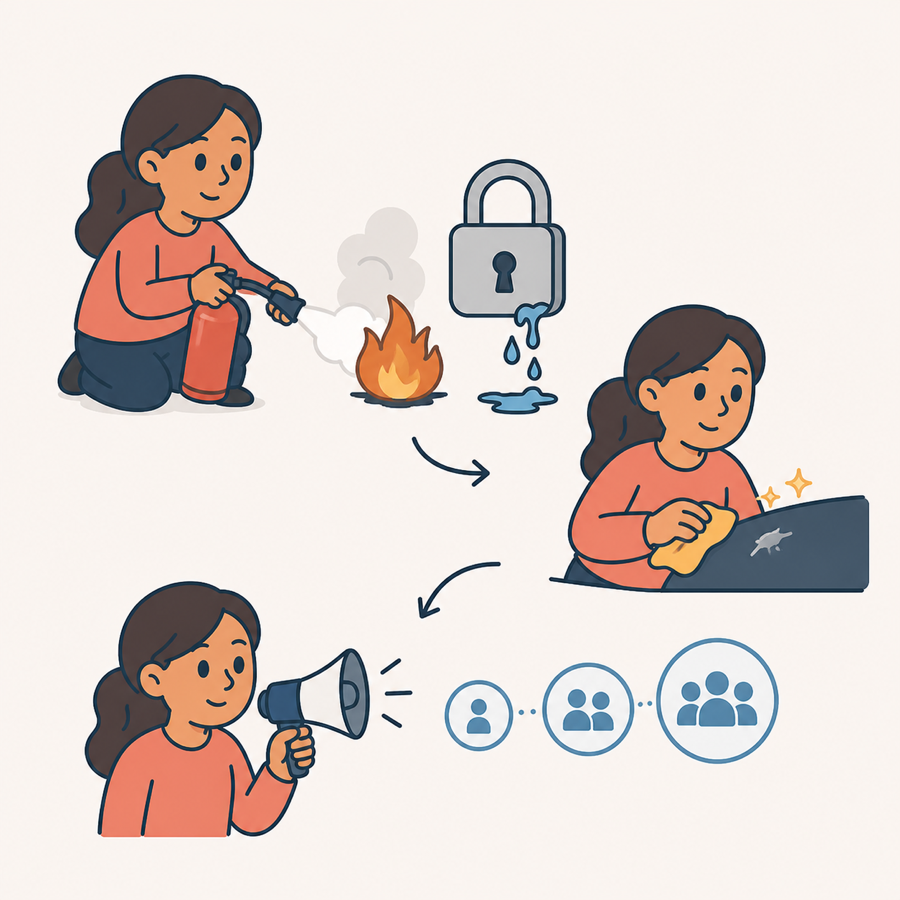
Urgency follows user harm, scope, reversibility, and time sensitivity; incident communication should state known impact, immediate protection, and the next update without inventing certainty.
Start course →
Reliability work becomes product work when failure harms decisions, trust, support load, cost, or the core value path; AI additionally needs visible uncertainty and recoverable human control.
Start course →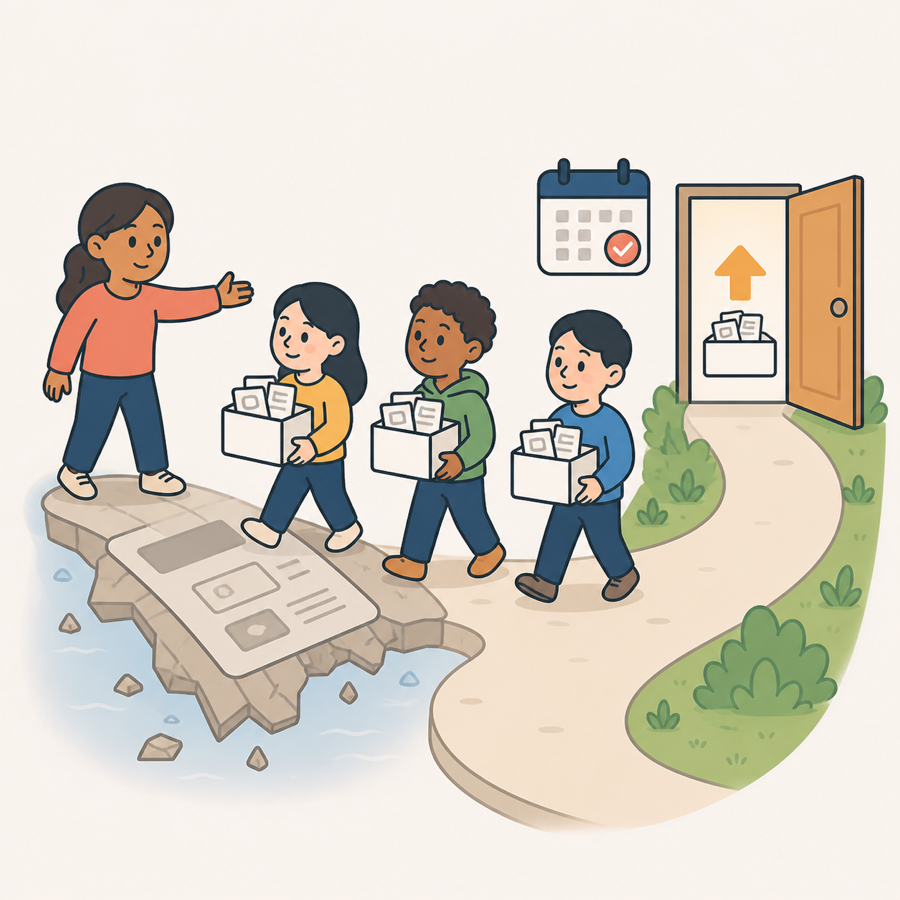
A responsible sunset understands dependency, gives proportionate notice, offers export or migration where possible, and explains what support and data access will end.
Start course →2 courses

Learn the few RevenueCat pieces that make buying, unlocking Pro, and restoring purchases work reliably.
Start course →
A successful purchase is only the first state. Verify launch, restore, expiry, billing problems, cancellation, account changes, and interrupted flows.
Start course →HOW YOU LEARN
Start with a short story about a decision a real builder might face.
Judge the evidence yourself before seeing TractionCue’s explanation.
Answer one question that connects the lesson to what you are building.
68 COURSES · FREE